A screen in a vehicle earns its place in two ways. It gives the operator a channel for service messages, fares and route changes, and it gives advertisers an audience that is sitting still for the length of the journey. Bus and coach operators, taxi fleets and transport media owners all use the same basic idea at different sizes.
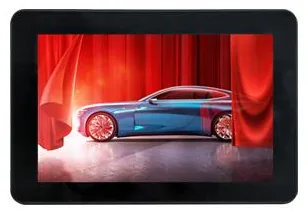
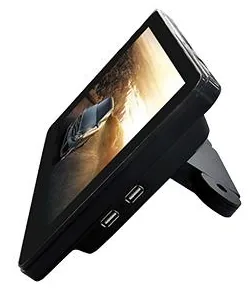
The range lists seven sizes from 10.1 to 32 inch, a stated brightness of 350 cd/m² and a Full HD (1920 × 1080) resolution reference. The displays run an Android configuration, offer Wi-Fi and 4G connection options, mount from the ceiling or on a pole, and carry a DC 8–36 V power input reference, a span that takes in the nominal 12 V and 24 V systems used in road vehicles.
The catalogue describes the displays as dust and shock resistant; no test standard is cited, so suitability is confirmed for your vehicle installation. Operating temperature is not stated either. Anything fitted inside a passenger vehicle also has to satisfy the operator’s own safety and approval requirements. We supply the information you need for that assessment, while compliance for the vehicle rests with the operator and the installer.
A fleet is a content management problem as much as a hardware one: many screens, always moving, often out of Wi-Fi range. We can scope digital signage content management around how your vehicles return to depot and where they have coverage. Location-based content or a passenger information feed is a separate, defined piece of work under software integrations, subject to the agreed integration.