KioskCraft
Your enquiry

Software & Management

AI solutions

Sales management software built around how your business actually sells — enquiries, quotations, orders, stock, follow-up and reporting — with AI applied where it demonstrably helps and your staff kept in control. It is scoped and developed for your process, not sold as a fixed product.

What this means in practice

A sales management system is the software a business uses to run its sales process: capturing enquiries, preparing quotations, taking orders, keeping product and stock data straight, following up with customers and reporting what happened. In many businesses that process is spread across an inbox, a spreadsheet, a till and someone's memory.

We design and build that system around your real process, rather than asking you to bend to a generic one. We then apply AI to specific jobs inside it: jobs where it saves staff time or helps a customer choose, and where the result can be checked. If a plain rule or a good search box would do the job better, we will say so.

Because Kiosk Craft also supplies kiosks and displays, the same system can reach the shop floor. A kiosk can guide a customer to the right product, a display can promote what you have available to sell, and a staff screen can show which enquiries need attention first. Behind the scenes it exchanges data with your till, stock, CRM or booking systems through agreed integrations.

Where AI can help in a sales process

Each of these is an example of something that can be scoped. None is a switch that is simply turned on: each depends on your data, your process and an agreed way of checking the results.
  • Guided product selection

    A kiosk asks a customer a few plain questions — what the product is for, the size needed, a budget range — and narrows a large range to a short, explained list. Suggestions draw on your product data and the rules you set, so staff can see why an item was recommended.

  • Conversational product help

    AI interaction kiosk hardware can be configured with a camera, a microphone and a high-performance graphics PC. Software can be developed for it that answers spoken or typed product questions from information you have approved. The conversational software is a separate scope from the hardware.

  • Suggested add-ons in ordering flows

    In an ordering journey the software can suggest relevant extras, such as a side, an accessory or a fitting service, based on what is in the basket and what is available. You decide which suggestions are allowed and can review how often they are accepted.

  • Enquiry triage and summaries

    Enquiries arriving from kiosks, web forms and email can be sorted by type and urgency and summarised, so the right person sees a clear brief rather than a long thread. Staff can correct the sorting, and corrections are recorded.

  • Drafted follow-ups for staff to approve

    The system can draft a quotation covering note or a follow-up message from the enquiry details and your own templates. A member of staff reads, edits and sends it. Nothing reaches a customer unreviewed unless you have decided a particular message type is safe to automate.

  • Demand and stock insights

    Working from your own sales history, the software can highlight lines selling faster or slower than usual, likely seasonal peaks and items at risk of running short. These are prompts for a buyer or manager to act on, not automatic purchase orders.

  • Content scheduling suggestions

    For digital displays, the system can propose which promotions to show where and when, based on sales patterns and availability. Your team approves the schedule through the signage content management workflow.

An example AI-assisted sales loop

Scoped around your sales process

  1. 1. Customer interaction

    Kiosk, display or enquiry form.

  2. produces

    2. Sales data

    Enquiries, orders, product and stock data.

  3. informs

    3. AI assistance

    Recommendations, summaries, suggested follow-ups, demand insights.

  4. reviewed by

    4. People decide

    Staff review and approve.

  5. leads to

    5. Better next interaction

    The result is measured and fed back.

    then back to step 1.

AI assists; your team stays in control.

An example loop: enquiry, order, stock and product data inform a suggestion; a member of staff reviews it; kiosks, displays or follow-up messages act on it; the result is measured and fed back. Illustrative diagram.

Where AI helps and where a person decides

AI is useful for sorting, summarising, suggesting and drafting. It should not be left to decide alone where a mistake affects a person, a price or a commitment made by your business.
Where AI helps and where a person decides. Example division of responsibilities. The division for your project is agreed during scoping.
TaskWhat AI can doWhat stays with your team
Product recommendationsRank and explain suitable options from your product data.Set the rules, exclusions and compatibility data the suggestions rely on.
Customer messagesDraft replies and follow-ups from the enquiry and your templates.Read, edit and send. Decide which message types, if any, may be sent automatically.
Quotations and pricingPre-fill a quotation from the enquiry and flag missing information.Approve prices, discounts, terms and anything else that commits the business.
Stock and purchasingHighlight unusual demand and likely shortfalls.Decide what to buy, when and from whom.
Decisions about peopleNothing on its own.Any decision that significantly affects a customer or an employee, such as refusing service, setting credit terms or assessing performance, is made by a person.

Scroll sideways to see the whole table.

Example division of responsibilities. The division for your project is agreed during scoping.

Safeguards written into every scope

  • Human approval

    Anything that is sent to a customer or commits the business passes a member of staff first, unless you have explicitly agreed that a specific low-risk action may run unattended.

  • Transparency

    Where a customer is dealing with an automated assistant, the interface says so. Where staff see a suggestion, they can see what it was based on. Suggestions and approvals are logged so they can be reviewed later.

  • Data protection

    The scope records what personal data is needed, why, where it is processed, which AI service may see it and how long it is kept, so that you can meet your obligations under UK data protection law. If a kiosk uses a camera or microphone, the scope states what is captured, whether anything is stored and how people are told.

  • Checkable results

    Each AI-assisted feature has an agreed measure, such as time saved per enquiry or how often a suggestion is accepted, and a plain fallback if it does not earn its place.

Data the software will need

AI-assisted features are only as good as the data behind them. Much of the early work in a project is getting this data clean and connected.
  • Product data: names, descriptions, categories, attributes, compatibility rules, images and prices, held in one maintained source
  • Stock data: current availability by location, updated often enough for the decisions that depend on it
  • Sales history: orders and quotations with dates, lines, quantities and outcomes, ideally covering a full seasonal cycle
  • Enquiry records: where enquiries arrive, how they are categorised today and what a good response looks like
  • Approved knowledge: the product information, policies and answers a conversational assistant is allowed to draw on
  • Access: a documented way to read and, where needed, write data in your till, stock, CRM or booking systems
  • Ownership: a named person responsible for keeping product and price data correct after launch

How a project is scoped: start small, measure, extend

  1. Map the sales process

    We walk through how an enquiry becomes an order today, where time is lost, where customers drop out and which systems hold the data.

  2. Pick one or two candidate uses

    We choose the places where help is most valuable and risk is lowest. Enquiry summaries, guided selection and drafted follow-ups are typical starting points.

  3. Check the data

    We review the product, stock and sales data those uses depend on and agree what must be cleaned or connected first.

  4. Build the core system and a pilot feature

    We build the sales management functions you need and one AI-assisted feature, with human approval and logging in place from the start.

  5. Measure against the agreed baseline

    We compare results with how the process performed before, using the measure agreed at the outset, and listen to the staff using it.

  6. Extend, adjust or stop

    Features that prove useful are extended to more products, sites or channels. Features that do not are changed or removed.

Questions to answer before you commission

  • Which part of your sales process costs the most staff time or loses the most customers today?
  • Where are your product, stock and sales data held, and how accurate are they?
  • Which decisions must always be made or approved by a person?
  • What personal data would the system handle, and who in your business is responsible for it?
  • How will you judge whether a feature has worked: time saved, fewer missed enquiries, more completed orders?
  • Do you have requirements about where data is processed or which kinds of AI service may be used?

What this includes — and what it does not

What is and is not included

AI sales management is a development service, not a packaged product. Kiosk Craft does not sell a ready-made AI assistant, and no AI software or subscription is bundled with our hardware. Software is scoped, designed and built for your project, and the scope records which AI model or service is used, where it runs and what data it may see.

We do not promise sales uplifts, accuracy figures or savings. Results depend on your data and your process, which is why projects start with a small, measured pilot. Licences, hosting, third-party AI service charges and support terms are set out in your quotation.

Hardware that fits

Product families that suit the applications on this page. Options are confirmed with your quotation.
  • AI interaction kiosks

    AI Interaction Kiosks

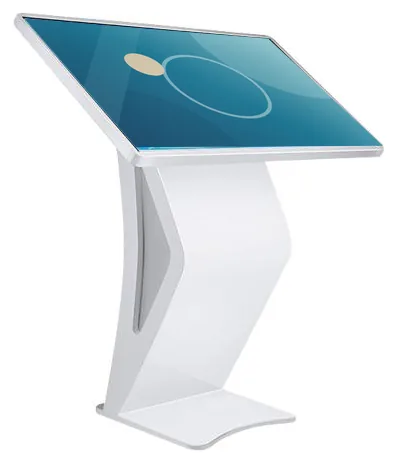
    Large-format 43, 49 and 55 inch touchscreen terminals with camera and microphone options, built to host conversational applications scoped around your business.

    • 43 to 55 inch
    • Indoor
    • Freestanding
    • Touchscreen
    View Options : AI Interaction Kiosks
  • Countertop kiosks

    Countertop Ordering Kiosks

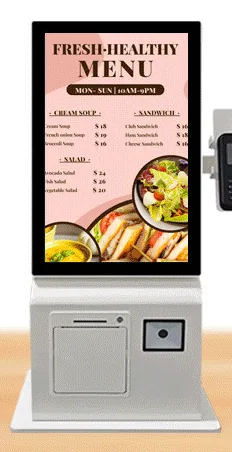
    Compact self-service ordering terminals for counters and reception desks. Nine designs with 15.6, 21.5 and 24 inch screen references.

    • 15.6 to 24 inch
    • Indoor
    • Countertop
    • Touchscreen
    View Options : Countertop Ordering Kiosks
  • Freestanding kiosks

    Freestanding Ordering Kiosks

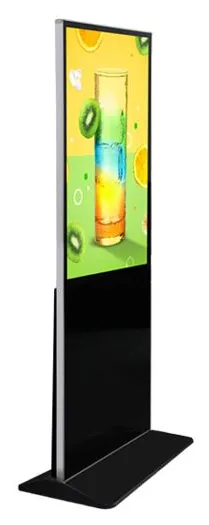
    Freestanding self-service ordering kiosks in fourteen enclosure styles, from slim pole stands to full-height towers, with 15.6 to 32 inch screen references.

    • 15.6 to 32 inch
    • Indoor
    • Freestanding
    • Touchscreen
    View Options : Freestanding Ordering Kiosks
  • Information and wayfinding kiosks

    All-in-One Information Kiosks

    All-in-one touchscreen kiosks from 21.5 to 98 inch in lectern, totem and wall-mounted forms, for wayfinding, directories, check-in and information points.

    • 21.5 to 98 inch
    • Indoor
    • Freestanding / Wall-mounted
    • Touchscreen
    View Options : All-in-One Information Kiosks

Guides to read next

Frequently asked questions

Is this a chatbot?

Not by default. A conversational assistant is one possible feature, and it suits some settings, such as product help on an AI interaction kiosk. Most of the value in a sales management system comes from less visible jobs: sorting and summarising enquiries, pre-filling quotations, suggesting add-ons and highlighting stock risks. We start from your process and only propose a conversational interface where it helps.

Do we need a lot of data before we can start?

You need accurate product data and a reliable record of sales and enquiries, but not a vast quantity. Features such as enquiry summaries and drafted follow-ups work from the enquiry in front of them and your templates. Demand and stock insights need more history. Part of discovery is an honest review of what your data can and cannot support.

Will AI send messages or make decisions without us knowing?

No. The default is that staff review anything sent to a customer and approve anything that commits the business. Any action you choose to automate is named in the scope and logged. Decisions that significantly affect a person are always made by a person.

Where is our data processed?

That is decided during scoping and recorded in the scope. Options include a hosted AI service from a third-party provider or a model running on infrastructure you control, each with different implications for cost, capability and data protection. We set out the options, and you choose with your data protection responsibilities in mind.

Can this work with the kiosks and systems we already have?

Often, subject to assessment. Existing kiosks need a suitable platform and enough processing capability, and existing systems need a documented interface that we are permitted to use. See integrations for what we ask your other suppliers to provide.

Talk to us about your sales process

Tell us how an enquiry becomes an order in your business today, which systems you use and where time is lost. We will reply by email with questions and a suggested starting scope.