Open-frame displays
High-Brightness Open-Frame Modules
High-brightness display modules in 32, 43, 55 and 65 inch sizes, supplied open-frame for integration into a suitable enclosure.
- 32 to 65 inch
- Embedded
- 2,000 to 2,500 nits
Product range
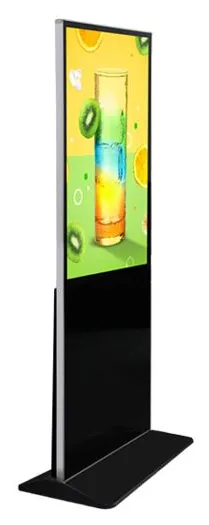
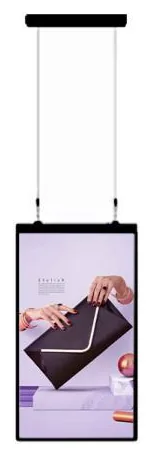
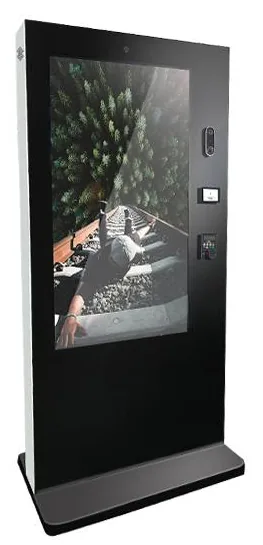
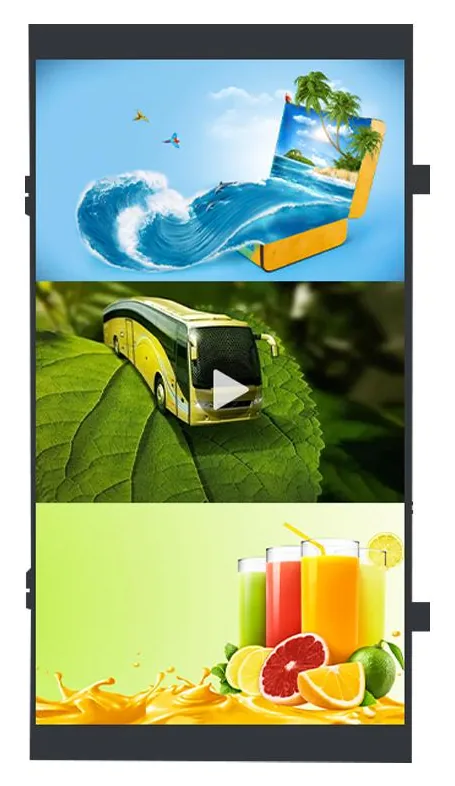
A digital advertising board earns its place when three things are true: people can see it, what it shows is current, and someone in your business can keep it that way without fuss. So the choice starts with practical questions. Where will the screen go? Who needs to read it, and from how far away? How often will the content change, and who will change it?
The answers point to the hardware. Inside a shop, restaurant or reception, Indoor Freestanding Advertising Displays (view the range) and Wall-Mounted Advertising Displays (view the range) run at indoor brightness levels of 300 to 450 nits. A screen that faces the street through glass needs far more light output, which is the job of High-Brightness Shop Window Displays (view the range) at 1,000 to 2,500 nits. A screen that lives outside needs a sealed, temperature-managed enclosure as well, as found in Outdoor Advertising Displays (view the range). Around those sit the specialist formats: menu boards, full-screen posters, stretched bar displays, lift screens, wood-frame art displays, double-sided displays and bus and taxi screens.
Hardware is only one part of the project. Digital signage content management is scoped separately, around how many screens you run, who updates them and whether content should follow a schedule. Hardware, software and ongoing management are described and quoted separately, so you can see what each part covers. If you are weighing up positions, our guide to indoor, window and outdoor displays explains the differences, and the digital advertising solution shows how the pieces fit together.
Browse by type
Catalogue
Showing all 13 products
Open-frame displays
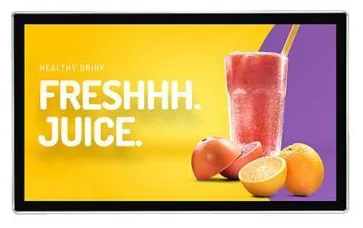
High-brightness display modules in 32, 43, 55 and 65 inch sizes, supplied open-frame for integration into a suitable enclosure.
Freestanding advertising displays
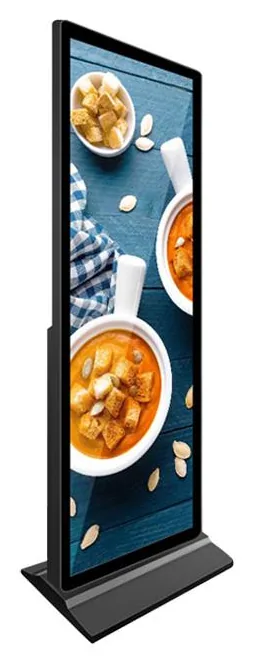
Freestanding digital posters and totems for indoor promotion, from 21.5 to 96 inch, on fixed or wheeled stands, with USB playback or Android and Windows options.
Full-screen digital posters
Tall freestanding digital posters from 64.2 to 80 inch, where the picture fills almost the whole front. Run one alone, or stand several side by side as one canvas.
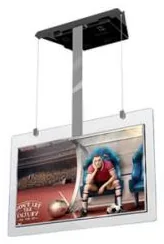
Shop window displays
Window-facing displays from 32 to 98 inch at 1,000 to 2,500 nits, single or double-sided, hung from the ceiling or on a floor stand behind the glass.
Wall-mounted advertising displays
Slim wall-mounted advertising screens in sixteen sizes from 10.1 to 98 inch, with Full HD as standard, an optional 4K panel and USB, Android or Windows playback.
Outdoor advertising displays
Outdoor advertising screens from 21.5 to 98 inch in totem, wall and portable forms, with high-brightness panels and cooling options set for each model.
Digital menu boards
Single or multi-screen digital menu boards for counters and collection points, built from our display families and paired with content management scoped to you.
Stretched bar displays
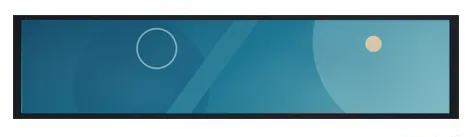
Ultra-wide bar screens in sixteen sizes from 19.5 to 80 inch for shelf edges, counters and narrow wall bands, in wall-mount or open-frame formats.
Lift advertising screens
Slim single and combined-screen displays for lift cars and lobbies, in portrait or landscape, with a printable logo panel and USB or Android playback.
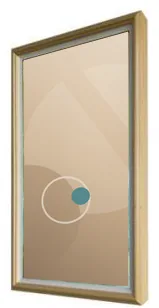
Wood-frame art displays
Digital displays in decorative wood frames, 21.5 to 49 inch, for artwork, menus and promotions in interiors where a bare screen would look out of place.
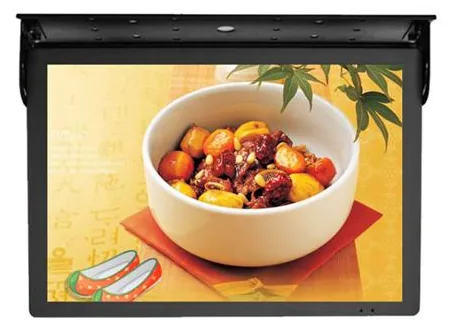
Bus and taxi advertising displays
Vehicle displays from 10.1 to 32 inch for buses, coaches and taxis, with ceiling or pole mounting, a DC 8–36 V input reference and Wi-Fi or 4G options.
Double-sided displays
A slim 55 inch display that shows content on both faces, the same or different on each, on a floor stand, hung from the ceiling or fixed to a wall.
Digital menu boards
Collection screens that show customers which orders are being prepared and which are ready, linked to your kiosks, tills and kitchen.
Where they fit
Put offers, new arrivals and brand content beside entrances, at aisle ends and behind counters, using freestanding or wall-mounted indoor displays.
Use a high-brightness window display so opening hours, offers and campaigns stay readable from the pavement in daylight.
Show items and prices on menu boards that your team can update, with different content for breakfast, lunch and evening where content management is scoped for it.
Place outdoor totems and wall units on forecourts, retail parks, campuses and car parks, in the brightness configuration the position calls for.
Welcome visitors, share notices and promote services on wall displays, framed art-style screens or lift screens that suit the interior.
Reach seated passengers with in-vehicle displays listed with a power input intended for bus and taxi electrical systems.
Choosing
This is the first decision, because brightness and protection follow from it. The indoor freestanding and wall ranges are listed at 300 to 450 nits. The shop window range is listed at 1,000 to 2,500 nits because it has to compete with daylight on glass, but it still sits inside the building. The outdoor range combines 1,500 to 2,500-nit configurations with sealed, temperature-managed enclosures. Outdoor ratings belong only to the outdoor range and are confirmed for the selected model.
Freestanding displays need floor space and a socket but no building work, and the indoor range lists a stand with wheels. Wall-mounted displays keep the floor clear and suit permanent positions. Shop window displays can hang from the ceiling or stand on the floor. Mounting options are listed family by family, so an option shown for one range is not assumed for another.
Wall-mounted and outdoor displays are listed in Full HD (1920 × 1080) with 4K options. Full-screen posters use non-standard formats of 3840 × 1350 and 3840 × 1440 pixels, and stretched bar displays are long, narrow strips whose proportions vary by size. Specialist shapes look striking, but content has to be produced for them, so plan the artwork along with the hardware.
A single-sided screen speaks to one audience. A double-sided unit faces two directions from one position, for example the street and the shop floor. The shop window range is listed in single and double-sided designs, and there is a separate 55-inch double-sided reference design whose panel technology is confirmed at quotation.
Depending on the family, the listed options include playback from USB media, built-in Android or Windows configurations, and an HDMI input for your own player. USB suits a single screen that rarely changes. Networked screens suit content management, which we scope separately around your team and your sites. The supported platform version is confirmed with your quotation.
Beyond the hardware
Applications and management tools are designed and built per project, then quoted separately from the hardware.
Hardware, software and services combined around a job you need done.
Questions
Mainly brightness and protection. Indoor freestanding and wall displays are listed at 300 to 450 nits, which suits positions away from direct daylight. Shop window displays are listed at 1,000 to 2,500 nits so the picture holds up behind sunlit glass, but they are still indoor products. Outdoor displays add a sealed, temperature-managed enclosure: IP65 protection and a −30 °C to 45 °C operating range are stated for the outdoor range and confirmed for the selected model with your quotation. Our guide to indoor, window and outdoor displays goes into more detail.
Not automatically. Displays are supplied as configured hardware, and content management is scoped and quoted separately. Some businesses only need a single screen that plays files from USB media, which needs no software project at all. Others want scheduled content across several sites, approval steps or menu data from another system. We scope digital signage content management around those requirements, and the quotation sets out what is included.
Start with the viewing distance and the position, not the biggest screen that fits. Small formats from 10.1 inch suit close-up positions such as a till point or a lift car. Mid sizes from 32 to 55 inch suit counters, waiting areas and shop windows. Large formats up to 98 inch suit big walls, malls and long viewing distances. A listed size range does not mean every size is offered in every design, so the sizes available for your chosen design are confirmed with your quotation.
On some ranges. Touch is listed as an option for indoor freestanding displays, full-screen posters and outdoor displays. Where a range does not list touch, we record it as a requirement to assess and do not promise it. If the main job of the screen is interaction, such as ordering, check-in or wayfinding, a purpose-built kiosk is usually the better starting point: see self-service kiosks and interactive displays.
Finishes are listed range by range. The indoor freestanding range lists black as standard with other colours as a custom option, the outdoor range describes logo, colour and styling as customisable, and several smaller formats are listed in black or white. Tell us what you have in mind in your enquiry and we will confirm what is possible for the selected model. Our design and branding service covers casing finishes and on-screen artwork.
Kiosk Craft is quote-led. Price, lead time, warranty and support terms depend on the model, quantity, configuration and any software involved, so they are set out in your quotation and not on the website. Add the products you are considering to your enquiry, or request a quote and describe the positions you have in mind.
Describe what the screen needs to do and where it will go. We will recommend the right hardware and software and confirm the configuration in a written quotation.