Lift advertising works because the audience is close, unhurried and facing the wall. For a building manager that means notices which actually get read; for a hotel or shopping centre it means promoting what is on the next floor; for a media owner it is a network of screens with a predictable audience.
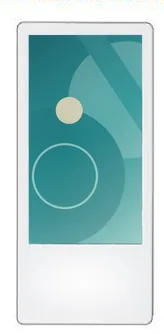
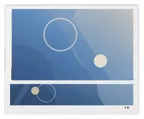
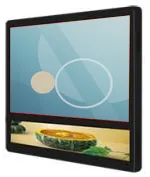
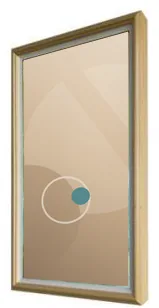
The range is deliberately compact. Single-screen units are listed in 18.5 and 21.5 inch, and combined-screen units pair a main screen with a smaller second screen in one shell: 18.5 + 10.1, 21.5 + 19 and 27 + 24 inch. The catalogue describes a slim design with a 25 mm thickness claim, which we treat as subject to configuration, a black or white metal shell, and portrait or landscape styles.
Below the screen is a plain panel that can be printed with a logo, so the unit looks like part of the building rather than a television on a wall. On a combined-screen unit the second screen is typically used for something that stays put, for example a floor directory or a sponsor message, while films and promotions rotate above it.
Playback is by USB or from an Android configuration, and the units are described as playing video, pictures and subtitles. USB is simple but means visiting each lift to change content. For a group of lifts or buildings we can scope digital signage content management instead. In a lift car the practical question is the network connection, so we settle that with you before recommending a platform.